
When It's Time to Stop Running Your Own Warehouse
By Maurice Greenberg, Managing Partner, SJM ReCommerce
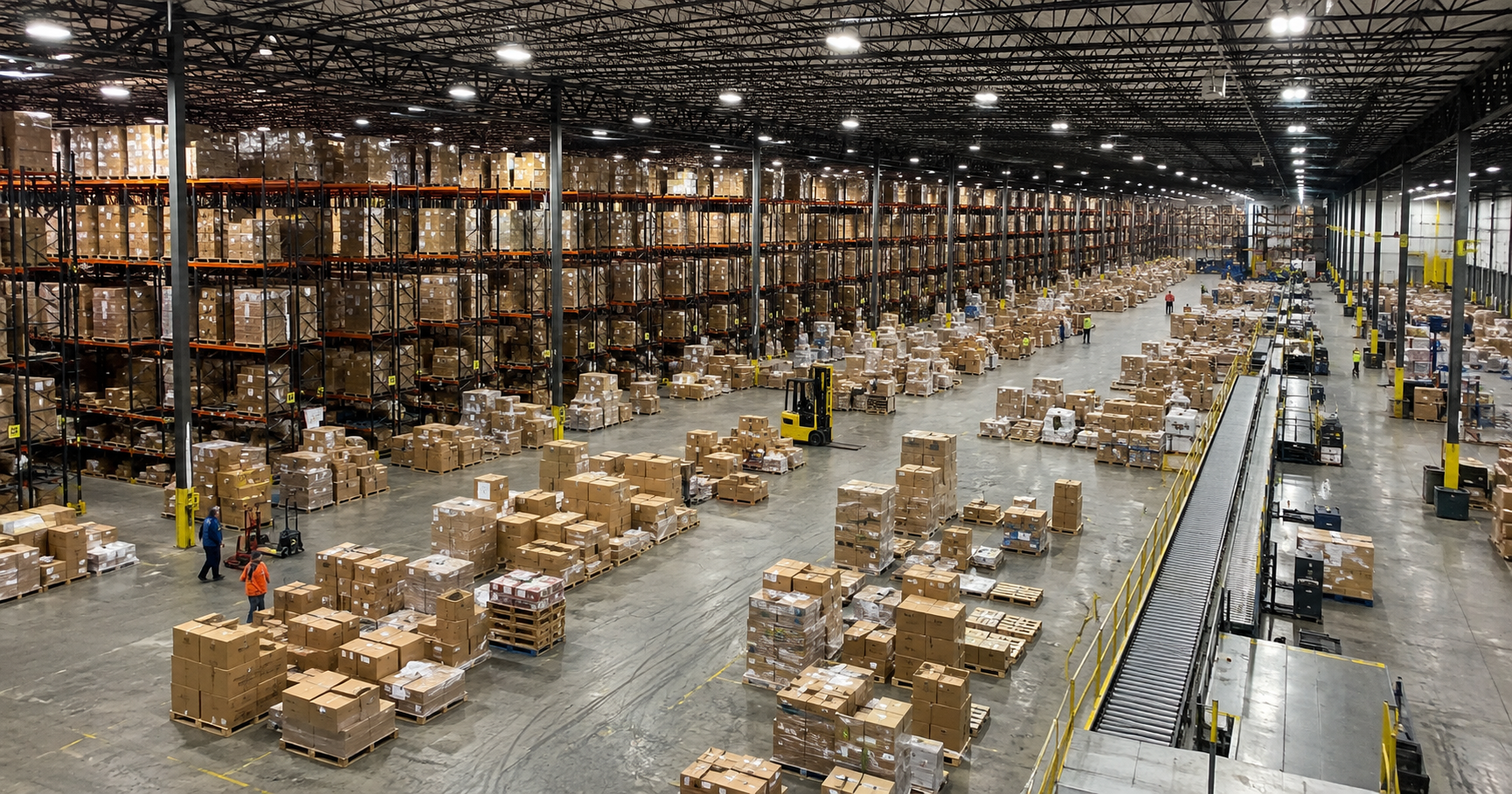
There is a point where the warehouse setup that got you here starts holding you back: orders ship slower, returns pile up, fees eat margin, and your team spends half its time on logistics instead of growth. When those signs show up, it is time to look at a 3PL. They will handle your inbound, storage, outbound, and returns under one roof, with real-time visibility into all of it. That is just the basics. The right partner can also handle freight and oversized product, custom crating, pick and pack, custom labeling, and more.
There is a moment most consumer brands hit, somewhere between scrappy and scaled, where the warehouse situation that used to feel manageable starts feeling like a problem that needs solving.
It does not happen overnight. It creeps up. Orders are getting out slower than they should. Returns are piling up with no clear process for handling them. Fees are eating margin you did not budget for. The people who should be focused on growing the brand are spending half their time dealing with logistics.
That is the moment worth pausing on. It is time to have the conversation about a 3PL partner.
But not every brand gets there the same way. Here is what it tends to look like across the brands we work with most.
The growing seller running out of space
You started selling on Amazon, Walmart, or your own site and it worked. Now you have product stacked in your garage, your spare bedroom, and a storage unit down the street. You are packing orders yourself or paying someone who is not set up for it, and every time you get a big order it throws everything into chaos.
You need real infrastructure. A place where product is received properly, stored correctly, and shipped out reliably. But you are not ready to sign a warehouse lease you are not sure you can fill, and you do not want to hire a logistics team before you know the volume is there to support it. That is exactly what a 3PL is for. You get professional storage and fulfillment without the fixed overhead, and you scale up or down based on what your business actually needs.
The brand that’s outgrown its setup
You have had some kind of warehouse operation for a few years. It made sense when you were smaller. Now returns do not have a real process, inventory visibility is poor, and reporting is whatever someone put together in a spreadsheet six months ago.
The economics shift quietly. One quarter the warehouse feels like it is working. The next it is the thing holding everything else back. Rent, labor, leadership time, return management - these all add up. Most brands realize they are spending more to manage it themselves than they would to have a partner do it right.
And they are correct. The published benchmarks show that once shared warehouse space and negotiated carrier rates are factored in, brands who make the move to a 3PL at the right time commonly cut total logistics costs by 20 to 40 percent. This is especially true for brands shipping heavy or bulky product, where storage, handling, and freight challenges show up long before order volume does.
The international brand entering the US market
You have been shipping to US customers from overseas or storing product near the port in containers. The shipping times are hurting your reviews. The costs are eating your margin. And every time something goes wrong with a US order, you are handling it from the other side of the world. The time zone gap alone makes everything slower.
What you need is a real US-based operation. Somewhere product can be received from overseas freight, stored properly, and shipped out to US customers or retail partners without the delays and costs that come with shipping direct from abroad. Getting that right from day one matters. The brands that try to piece it together on the cheap end up paying more to fix it later.
The FBA or WFS seller who’s done paying the toll
Fulfillment by Amazon and Walmart Fulfillment Services made sense when you needed reach and did not want to build your own logistics. But at some point the fees compound and the rules tighten. The margin that was supposed to be there starts disappearing into storage charges, removal fees, and return processing costs you have no visibility into.
Take returns specifically. When one comes back through FBA or WFS, it goes back to Amazon or Walmart. Not to you. You do not see it. You do not know what condition it is in. You are getting a credit that may or may not reflect reality, and you have no way to verify it because the product never touched your hands.
For brands doing meaningful volume, that is not a fulfillment strategy. That is a dependency. The brands that break it and move to an independent 3PL consistently get better margin, better visibility, and more control over what happens to their product at every stage of its life.
What does the right partner actually look like?
At the most basic level, a good 3PL gives you four things:
- Secure, organized storage you can trust
- Fast and accurate inbound receiving
- Reliable outbound fulfillment across parcels and freight
- Real-time visibility into all of it
Those are not differentiators. They are the baseline. If a partner cannot deliver on those consistently, nothing else matters.
Beyond the basics, the right partner should also be able to answer yes to all of these:
- Can they handle your full range of product sizes and shipping methods?
- Can they receive overseas freight and turn it into parcel shipments the same week?
- Can they build a custom crate for oversized equipment?
- Can they scale when your volume spikes without your orders getting deprioritized?
- When returns come back, is there a real process waiting for them, and not just a corner of the warehouse?
That last one matters more than most brands realize until it is too late. Returns need the same infrastructure as everything else. Receiving, inspection, grading, refurbishing if needed, and visibility into every unit from the moment it arrives.
There is one more place most 3PLs quietly fall short. The bulk of them are built for small-parcel e-commerce. They can ship a poly mailer or a small box all day long, but the moment something needs a pallet, a custom crate, or LTL freight, they are out of their depth. If you sell anything heavy, bulky, or oversized, this is the capability that separates a real partner from one that will deprioritize your freight or pass it off to someone else.
Put it all together, and the full picture of a proper 3PL is one partner handling inbound, storage, outbound, and returns, with a single real-time view of your inventory. Most 3PLs are built for one or two pieces of that. Finding one that handles all of it well is rarer than it should be.

How do you know it’s time?
If any of this sounds familiar, the conversation is worth having sooner rather than later. The brands that wait until the situation is truly broken end up making the transition under pressure, which makes it harder than it needs to be.
It also does not have to be all or nothing. Some brands come to us for the full operation: inbound, storage, outbound, and returns. Others start with a single piece, like storage, or just returns, and add more as they grow. You can use as much or as little as your business needs right now, and scale the relationship up over time.
We work with consumer brands across outdoor power equipment, tools, e-bikes, and more. For each one, we handle some or all of their returns management, refurbishing, and 3PL fulfillment, depending on what they need. Most conversations start with a walkthrough of what we do and how we do it, and most brands leave with a clearer picture of what their operation could look like with the right partner behind it. If you are starting to feel the ceiling, let’s talk.